DELEGATION SIZE
Single
EXECUTIVES
Ms. Myra Amin (she/her)
Ms. Emma Lagunas (she/her)
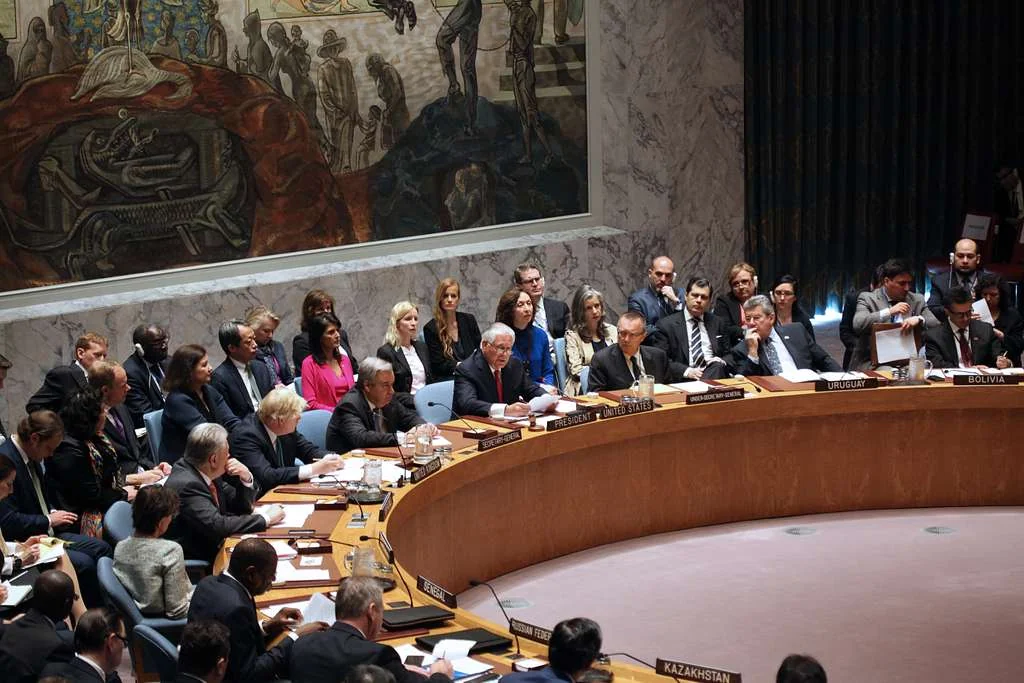
The United Nations Security Council is one of the most important and influential international bodies that helps maintain stability in the world. The only UN body that can pass legally binding legislation, it was established in 1946 in the aftermath of World War II. Many bodies have been created, and conventions have been had to keep the peace. In 1920, the Paris Peace Conference established the League of Nations, the first worldwide intergovernmental organization devoted to maintaining peace. At the end of the Second World War, it was moved into different parts of the UN, such as the UNSC.
In the Security Council, there will be five permanent members and seven elected members. When voting, all permanent members must agree on a directive to pass; if even one votes against the resolution, then it does not pass. Delegates who are representing permanent members should know that using their veto powers irrationally could result in disaster, not only for nations that would have been affected, but their own. Delegates are encouraged to look at the United Nations Charter, specifically Articles 23-54, to understand their powers in this body.
These twelve nations must work together to find a solution to the issue being discussed at this meeting of the council: rising terrorism in the Horn of Africa. If they cannot find a solution, it could be a catastrophe for not only their nations but the rest of the world as well.
Documents
Background GuideCommittee Members
 Dorothy Shea
 Barbara Woodward
 Carolyn Rodrigues-Birkett
 Evangelos Sekeris
 Nicolas de Rivière
 Asim Iftikhar Ahmad
 Abukar Osman
 Michael Imran Kanu
 Fu Cong
 Samuel Žbogar
 Vassily Nebenzia
 Hwang Joonkook