After finishing your Model UN conference—once the excitement and sense of accomplishment have settled—you may be left with a nagging question: what’s next? Perhaps you feel the urge to do more, to give back, to make a difference in your community.
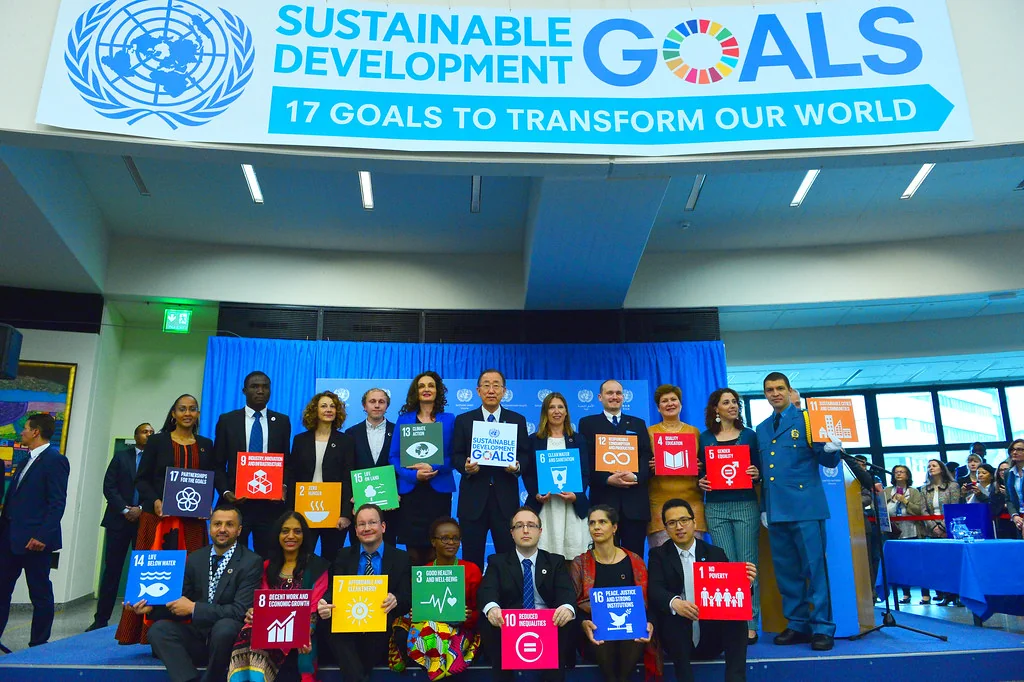
In 2015, the United Nations launched the 2030 Agenda for Sustainable Development, introducing the Sustainable Development Goals (SDGs). These seventeen goals form a global framework for building a better, more sustainable future. They call for action to end poverty, protect the planet, improve education, and promote peace. World leaders have been working toward them for nearly a decade, and while progress has been made, much more remains to be done.
But what does this have to do with you?
The skills you demonstrated during Model UN don’t disappear when the gavel drops. Your abilities in debate, public speaking, collaboration, and problem-solving can connect directly to advancing the SDGs.
When you spoke in committee, you were advocating for your delegation’s interests. That same advocacy can be used in real life—raising awareness about climate action (Goal 13), gender equality (Goal 5), or education access in your community (Goal 4).
When you built coalitions and drafted resolutions, you were practicing teamwork and leadership. Those same skills can help you organize projects—whether that’s a recycling initiative, a fundraiser, or volunteering with a local nonprofit. The tools you honed in Model UN can translate into real-world impact.
So, how can you get started?
The best way is to start small. Look around your community: what issues do you see? Where is improvement needed? Every action, no matter how small, adds up. Organizing a park clean-up, for instance, improves your neighborhood while contributing to SDG 15: Life on Land, which emphasizes protecting ecosystems and biodiversity.
Talk to people at your school or in your neighborhood. Start conversations, listen to their concerns, and learn what matters most to them. Building solutions begins with dialogue. Use your voice to inspire others and bring them together around a shared cause.
As you do this, remember: meaningful change takes time. Whether it’s a monthly service project, a student club, or an ongoing campaign, commit to your cause. Global leaders don’t expect to solve poverty, inequality, or climate change in a single meeting, and neither should you. Consistency matters. Maybe you’ll run a weekly club, write a monthly blog on climate change, or organize annual community events. Whatever you choose, make sure it’s an issue you genuinely care about—passion fuels perseverance.
So, you’ve done Model UN. Now what? Now it’s time to take what you’ve learned and use it to make a difference—in your school, your community, and the world.
United Nations Sustainable Development Goals
- No Poverty – End poverty in all its forms everywhere.
- Zero Hunger – End hunger, achieve food security, improve nutrition, and promote sustainable agriculture.
- Good Health and Well-being – Ensure healthy lives and promote well-being for all at all ages.
- Quality Education – Ensure inclusive and equitable quality education and promote lifelong learning opportunities.
- Gender Equality – Achieve gender equality and empower all women and girls.
- Clean Water and Sanitation – Ensure availability and sustainable management of water and sanitation for all.
- Affordable and Clean Energy – Ensure access to affordable, reliable, sustainable, and modern energy for all.
- Decent Work and Economic Growth – Promote sustained, inclusive, and sustainable economic growth, full and productive employment, and decent work for all.
- Industry, Innovation and Infrastructure – Build resilient infrastructure, promote inclusive and sustainable industrialization, and foster innovation.
- Reduced Inequalities – Reduce inequality within and among countries.
- Sustainable Cities and Communities – Make cities and human settlements inclusive, safe, resilient, and sustainable.
- Responsible Consumption and Production – Ensure sustainable consumption and production patterns.
- Climate Action – Take urgent action to combat climate change and its impacts.
- Life Below Water – Conserve and sustainably use the oceans, seas, and marine resources.
- Life on Land – Protect, restore, and promote sustainable use of terrestrial ecosystems, forests, and biodiversity.
- Peace, Justice, and Strong Institutions – Promote peaceful and inclusive societies, provide access to justice, and build effective institutions.
- Partnerships for the Goals – Strengthen the means of implementation and revitalize the global partnership for sustainable development.