
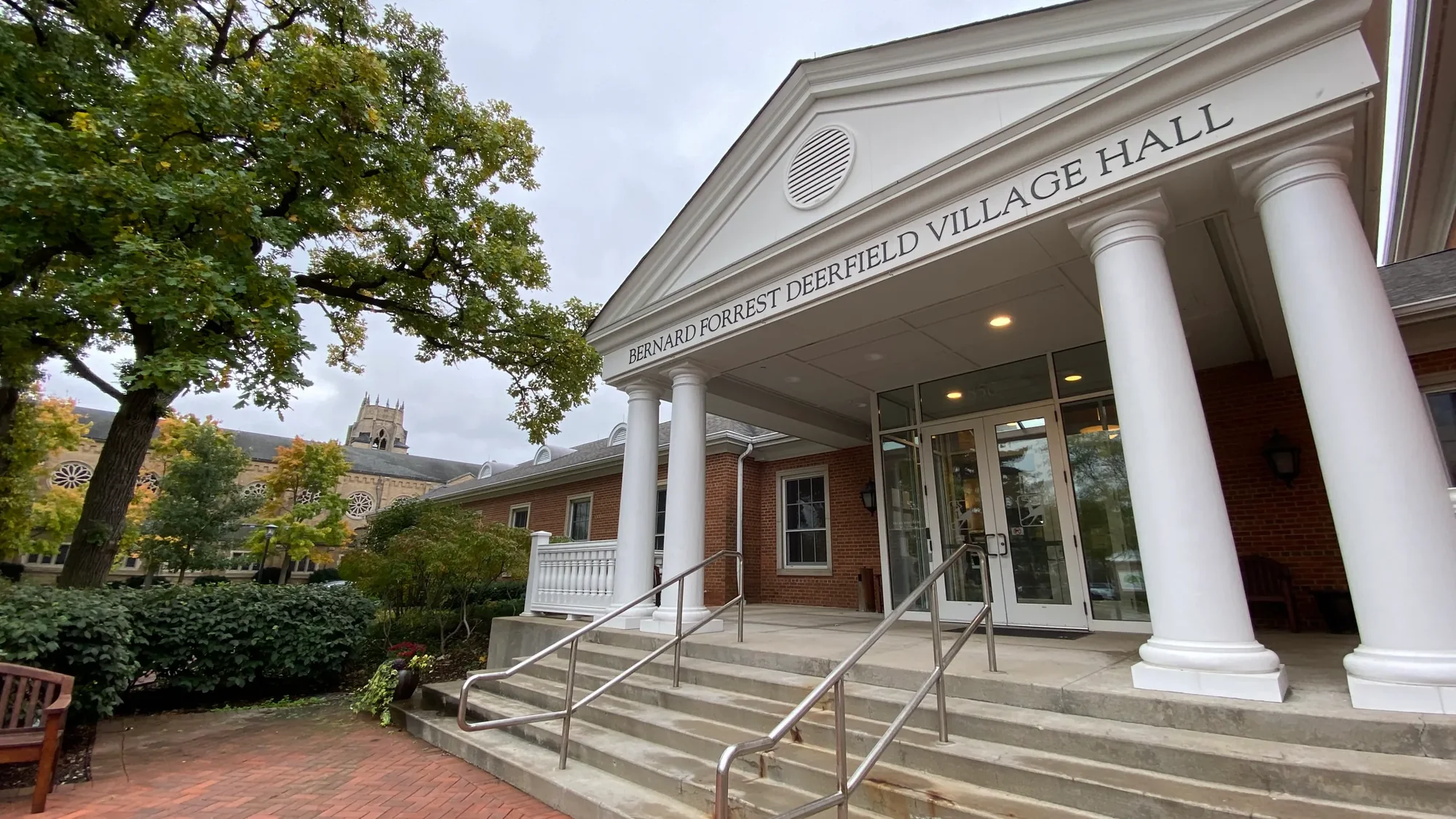
Last night I arrived at the Deerfield Village Hall at 7:30 p.m.; JAMUN was receiving a commendation from the mayor for its work and service to the community. I wasn't quite sure what to expect (I had never been to a village board meeting before), but I was hoping it would be a brief ceremony followed by a few small village-related business items.
I was wrong.
Although the board meeting began as expected—the Pledge of Allegiance, roll call, and then a five-minute-long commendation—it quickly diverged from my initial expectation.
The board was examining a plan to renovate an office building into a housing-education facility hybrid. They called various people—contractors, business owners, landscapers, and village managers—to speak about the different aspects of the project. This went on for 157 minutes. 157 minutes of concerned citizens talking about their fears; 157 minutes of developers talking about revitalizing an unused office building; 157 minutes of traffic experts talking about crosswalk safety.
And although I left the meeting with many questions—Should the crosswalk be further north? Are there enough electric charging stations in the garages? Is the building by the Walgreens a better fit for this project?—one question rang louder than the rest: why do we have local government?
I have always understood the point of the federal government. There are too many national concerns for each individual citizen to fully educate themselves on, so we trust a group of people to study, debate, and vote on them for us.
And I understood the point of state governments too. Each state has a unique makeup of people, culture, and geography. States bordering water might need commissions on fishing, while states with national parks might need legislation surrounding wildlife preservation.
But what about local governments? Governments that only govern 19,000 people? Surely the issues being debated there are not so vast as to be inaccessible to the locality's citizens.
And, in a way, I suppose they aren't. As evidenced by the passionate citizens who chose to speak for and against the proposed development, the issues that the Village of Deerfield's Board of Trustees debates are not too difficult for its citizens to access. Really, the Village could put every decision up to a referendum, and then the population of Deerfield could make its decisions directly.
But do they want to? Do they really want to read 80-page-long traffic reports? Do they want to consider the effect of moving a crosswalk a foot closer to a hill? Do they want to compare the difference between high-speed and low-speed electric charging?
This is where the purpose of local government lies. For no reason other than their commitment to the community, seven dedicated citizens give up their evening every other Monday. They listen to the concerns of each citizen who wishes to raise them. They read traffic reports, debate crosswalk placement, and ask questions about charging infrastructure. All of this, they do to make Deerfield a better place.
As I watched Mayor Shapiro conclude the meeting, two words flashed in my mind: public service. At its core, that is what he and the rest of the board were doing: a service for the public. Each and every person at that meeting was there only because they wanted to do something good for their neighbors.
And so, as I write this, I feel a specific sense of honor to be hosting JAMUN III in the same Village Hall where I learned what public service looks like. Each and every delegate who competes in our fall conference will debate issues that might not even affect them—wars far from U.S. soil, policies for diseases they don't have, or the mistreatment of prisoners in foreign countries—and they will do it simply because they want to fulfill their civic duty. They will do it because they want to make the world a better place, and because they want to practice solving the world's largest problems as a team.
I cannot wait to see what they do.